Neurodiversity shows up different in everyone.
Start with strengths, then support the challenges.
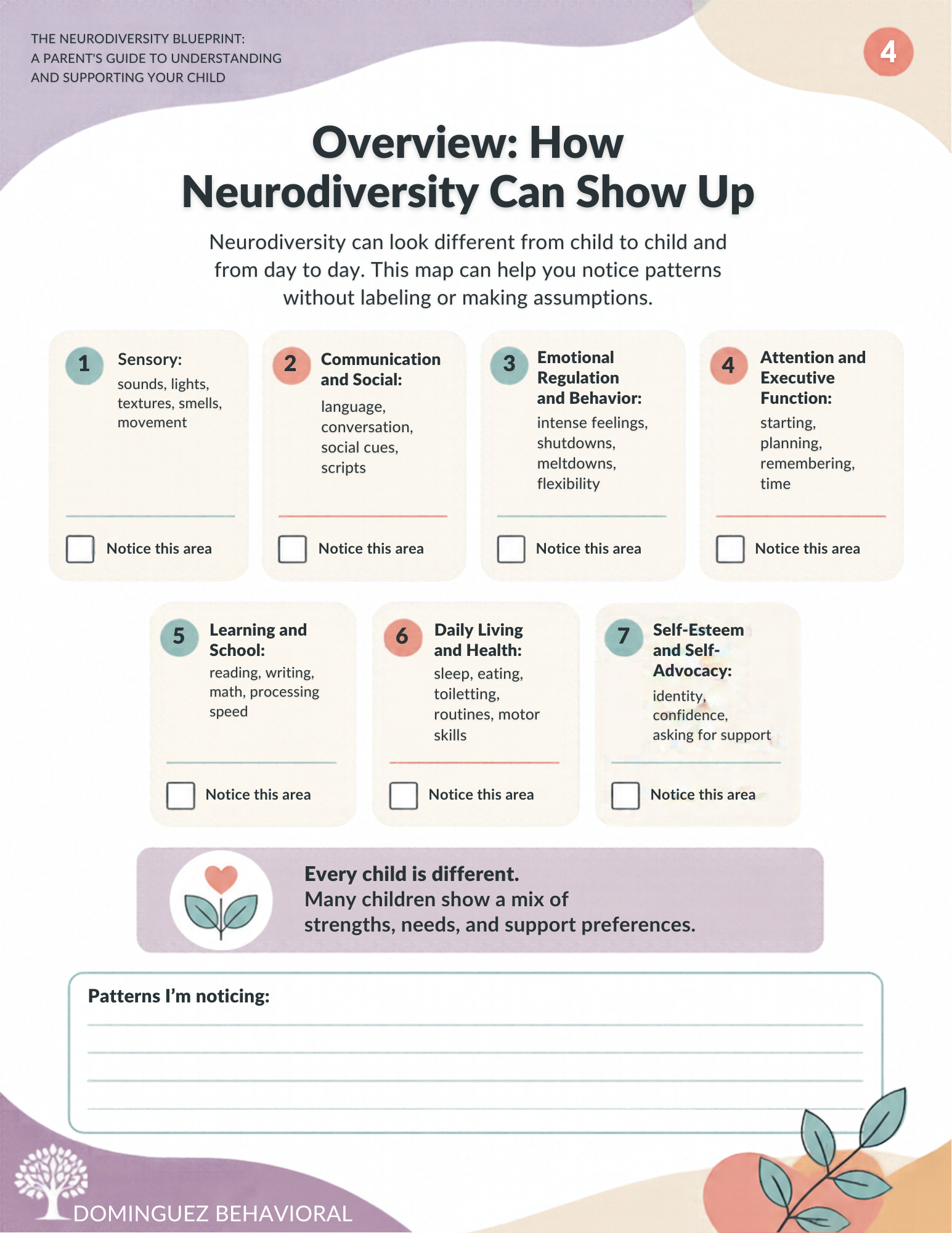
This one-page printable gives you an at-a-glance map of eight areas of your child’s daily life. Each one covers what it can look like and what to try first:
Sensory: strong reactions to sounds, lights, or textures
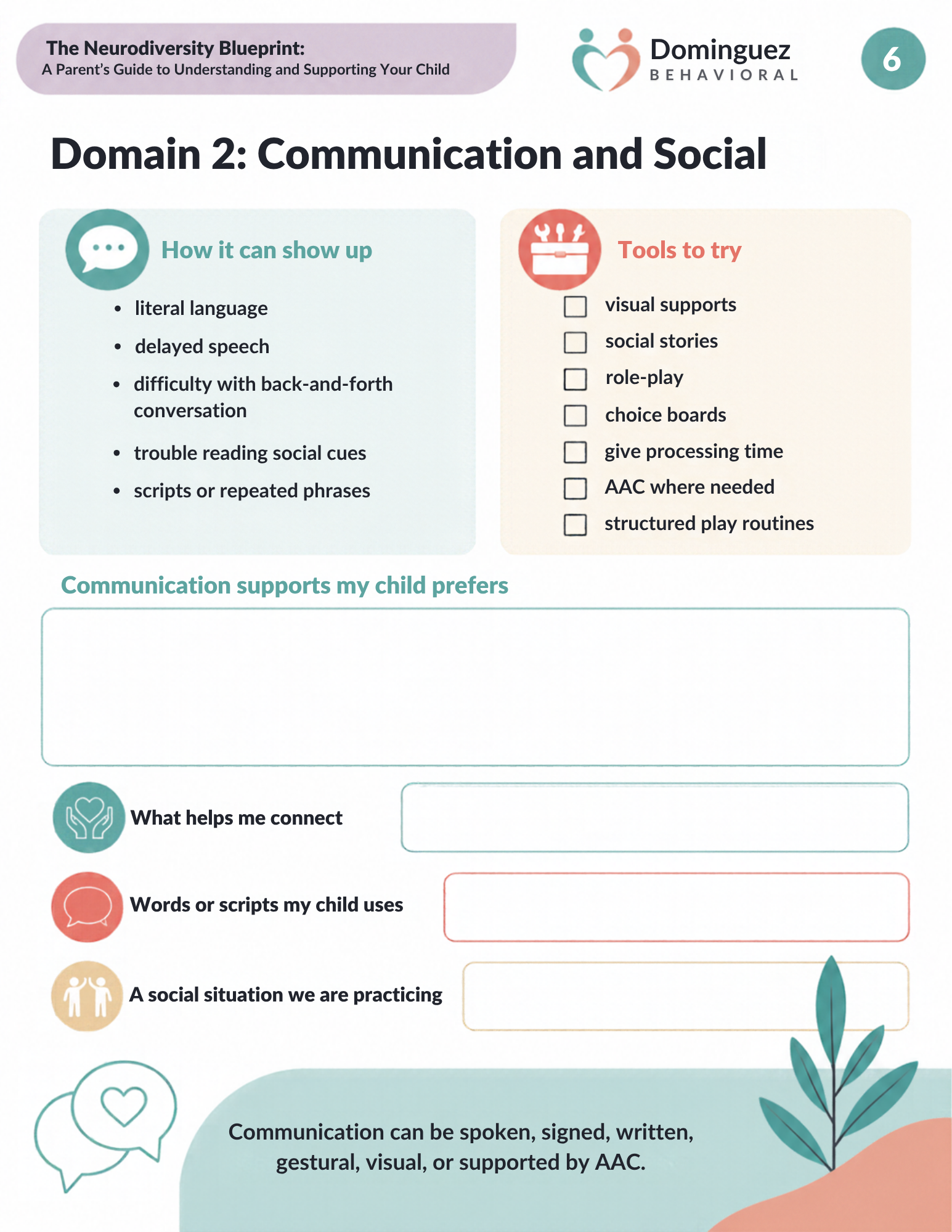
Communication and social: literal language and missed social cues
Emotions and behavior: meltdowns, shutdowns, and intense feelings
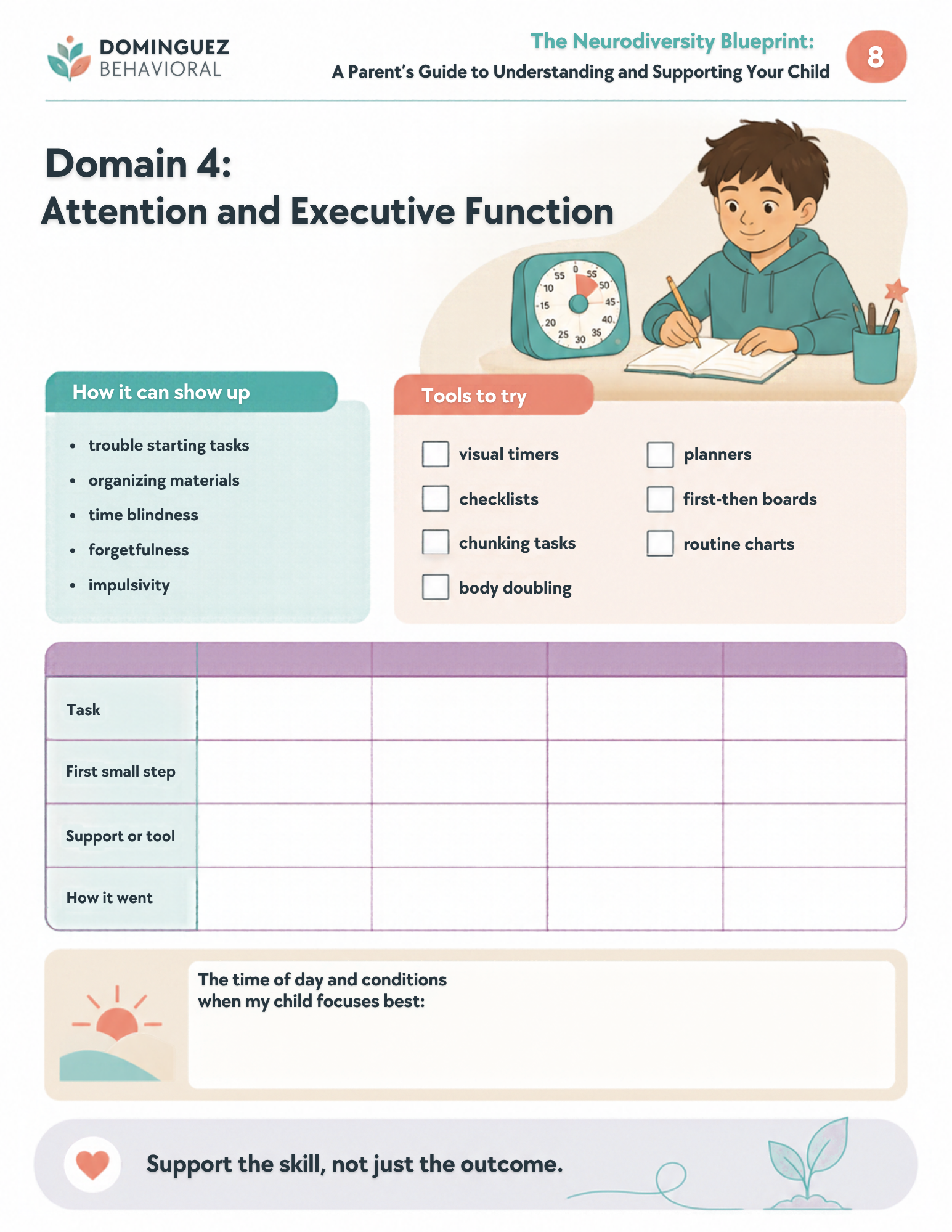
Attention and executive function: trouble starting tasks and keeping track of time
Learning and school: reading, writing, math, or processing-speed struggles
Daily living and health: sleep, food, and routines
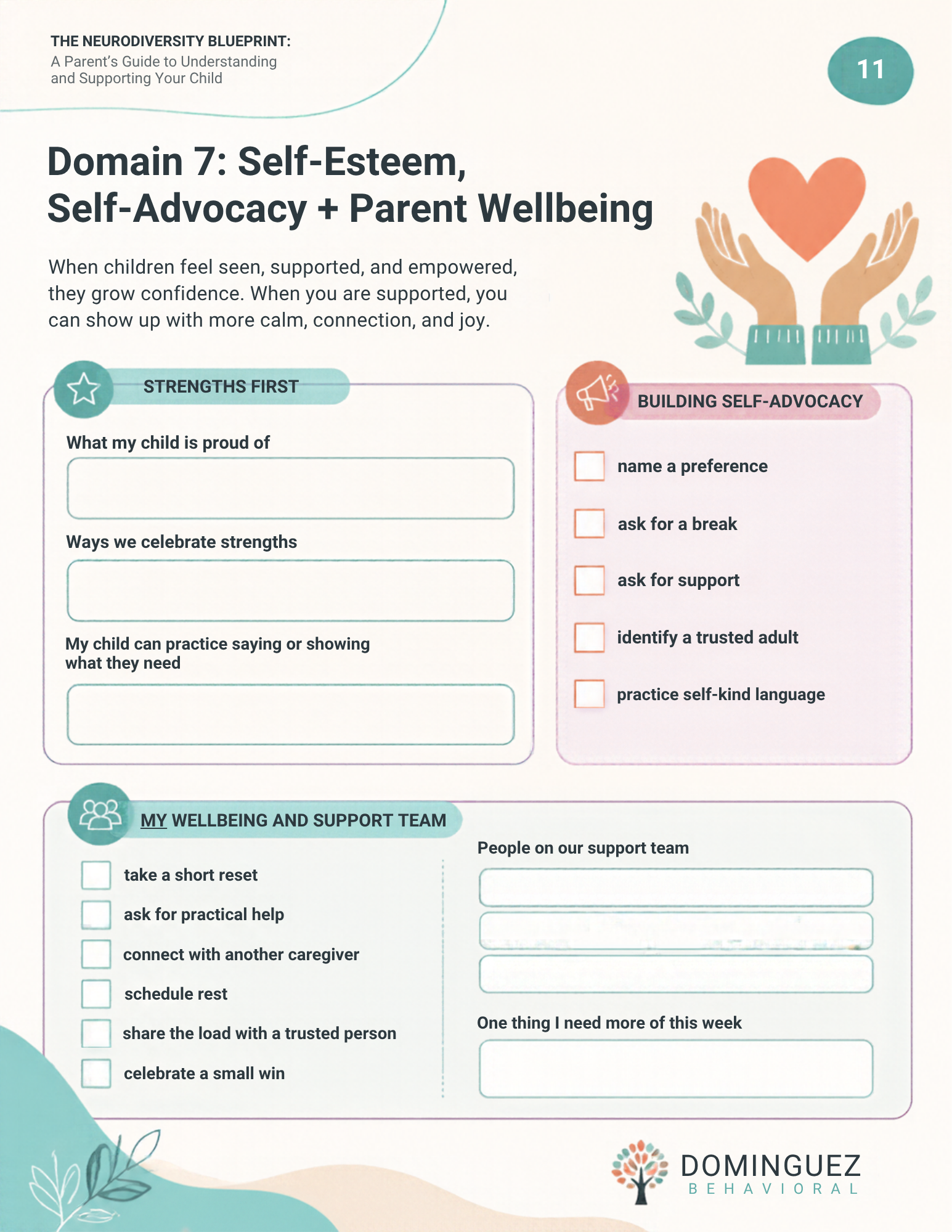
Self-esteem and self-advocacy: helping kids name what they need
Parent wellbeing: because you need support too
At the bottom are three write-in boxes for your child’s top 3 strengths, their top triggers, and what helps most. It’s a quick way to see patterns and bring clear notes to a teacher, therapist, or doctor.
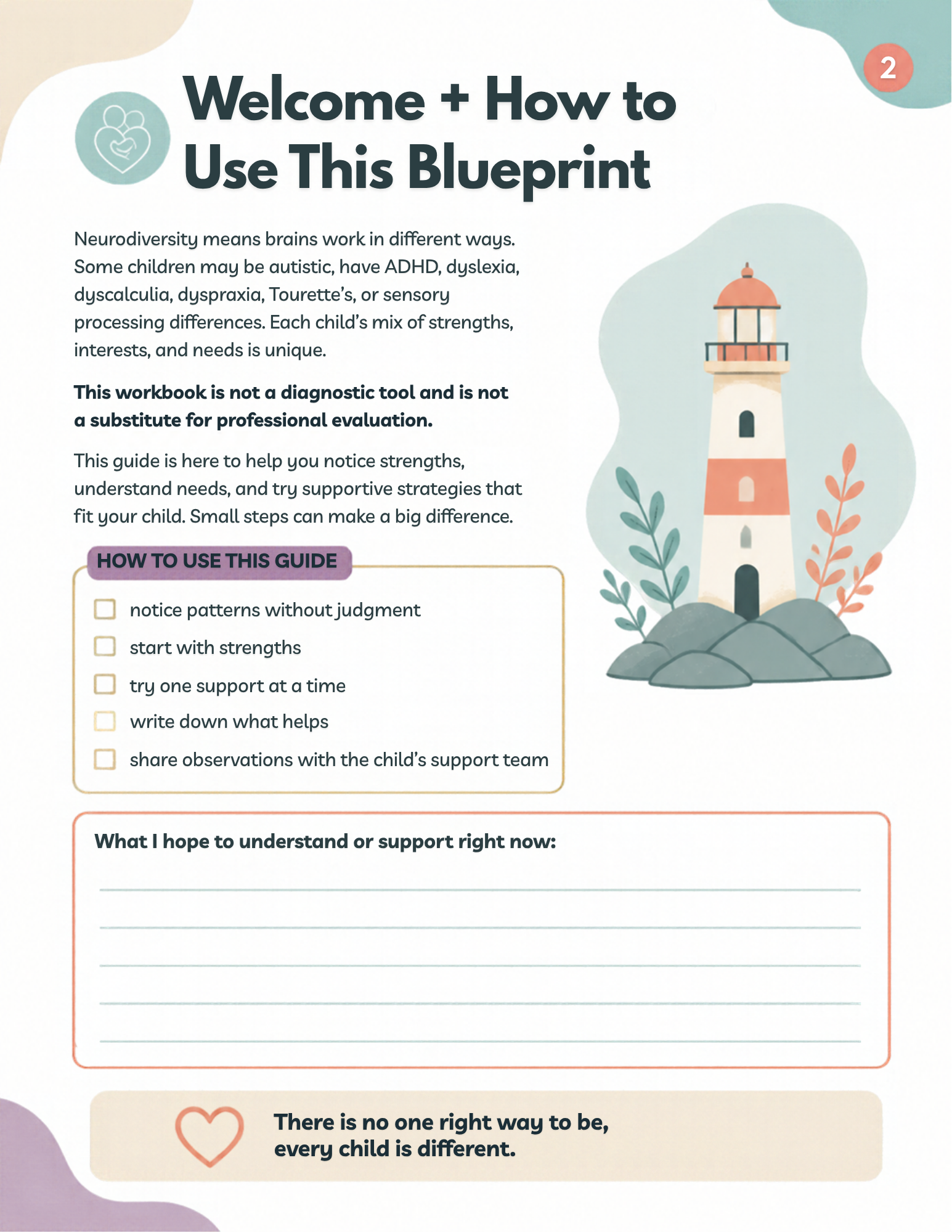
Who it’s for: Parents and caregivers of children who are neurodivergent, who may be, or who are just starting to ask questions. No diagnosis is needed.
Format: Printable PDF, 1 page, US Letter. Free instant download.
Want to go deeper? The full Neurodiversity Blueprint Parent Workbook has 12 pages of tools, planning pages, and trackers.


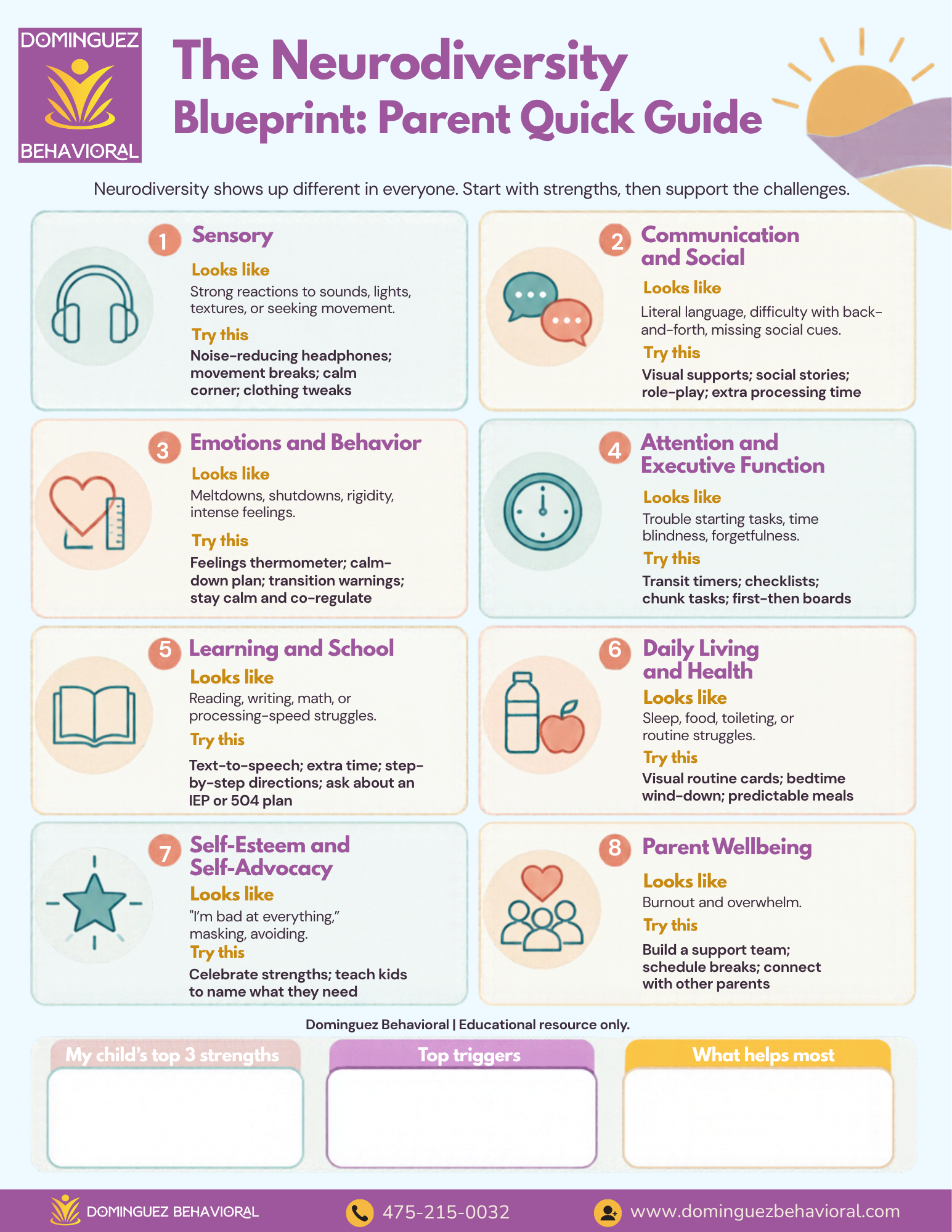 Image 1 of 1