Knowing what you need is the first step. Asking for it is a skill, and it gets easier with practice.
You don’t need a perfect script or a big conversation to ask for what helps you at work. This one-page printable walks you through four steps, from figuring out what helps to making the ask.
What’s inside
1. What I know about myself: write-in lines for when you do your best work, what drains your energy, how you communicate best, and the strengths you bring to your team.
2. Tools and supports that help me: a checklist of common workplace supports, such as written instructions, agendas before meetings, noise-reducing headphones, a quieter workspace, regular breaks, flexible deadlines, regular check-ins, and a flexible or remote schedule, plus space for your own.
3. Ways to ask: six ready-to-use phrases you can adapt, like “I do my best work when ___. Would it be possible to ___?” and “I’d like a little time to think about this. Can I get back to you by ___?”
4. Before you ask: a simple five-step plan: name what’s hard, pick one or two supports, practice what you’ll say, choose a calm time to talk, and follow up in writing.
Who it’s for: Adults who are neurodivergent, who think they may be, or who simply work best with some adjustments. You don’t need a diagnosis, and you don’t have to share one to ask for what helps.
Format: Printable PDF, 1 page, US Letter. Instant digital download.
Pairs well with: the Neurodiversity Blueprint Adult Quick Guide (free) and the full Adult Workbook. Dominguez Behavioral also offers workshops for workplaces. Contact us to learn more.
Educational resource only. Not legal, medical, or psychological advice. Workplace rights and processes vary by location and employer.


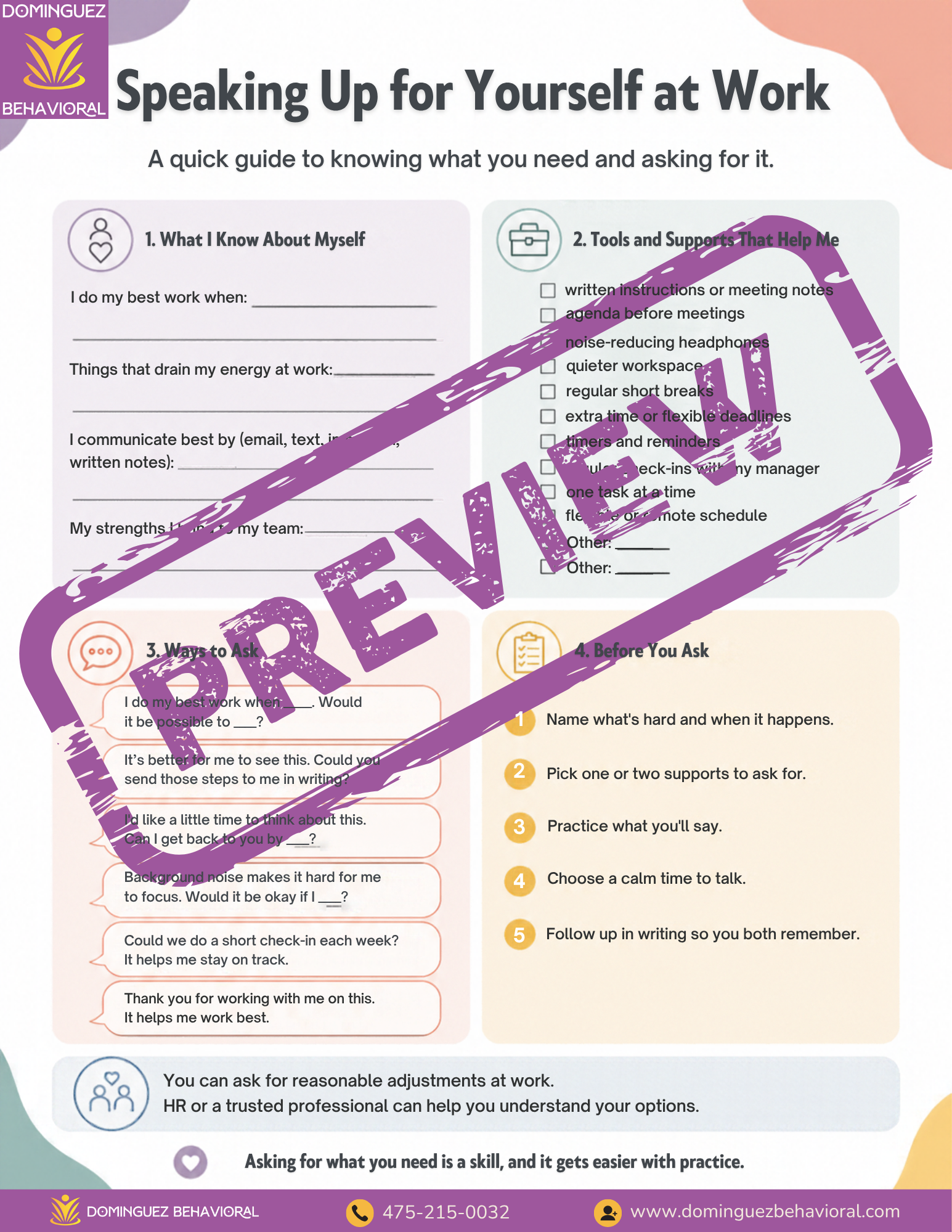 Image 1 of 1