Small adjustments. Big difference for your students.
You don’t need a special tools to support a neurodivergent student. You need a few reliable strategies you can use tomorrow. This one-page guide gives you an easy-to-skim reference you can keep at your desk, share at a staff meeting, or tuck into your planning binder.
What’s inside
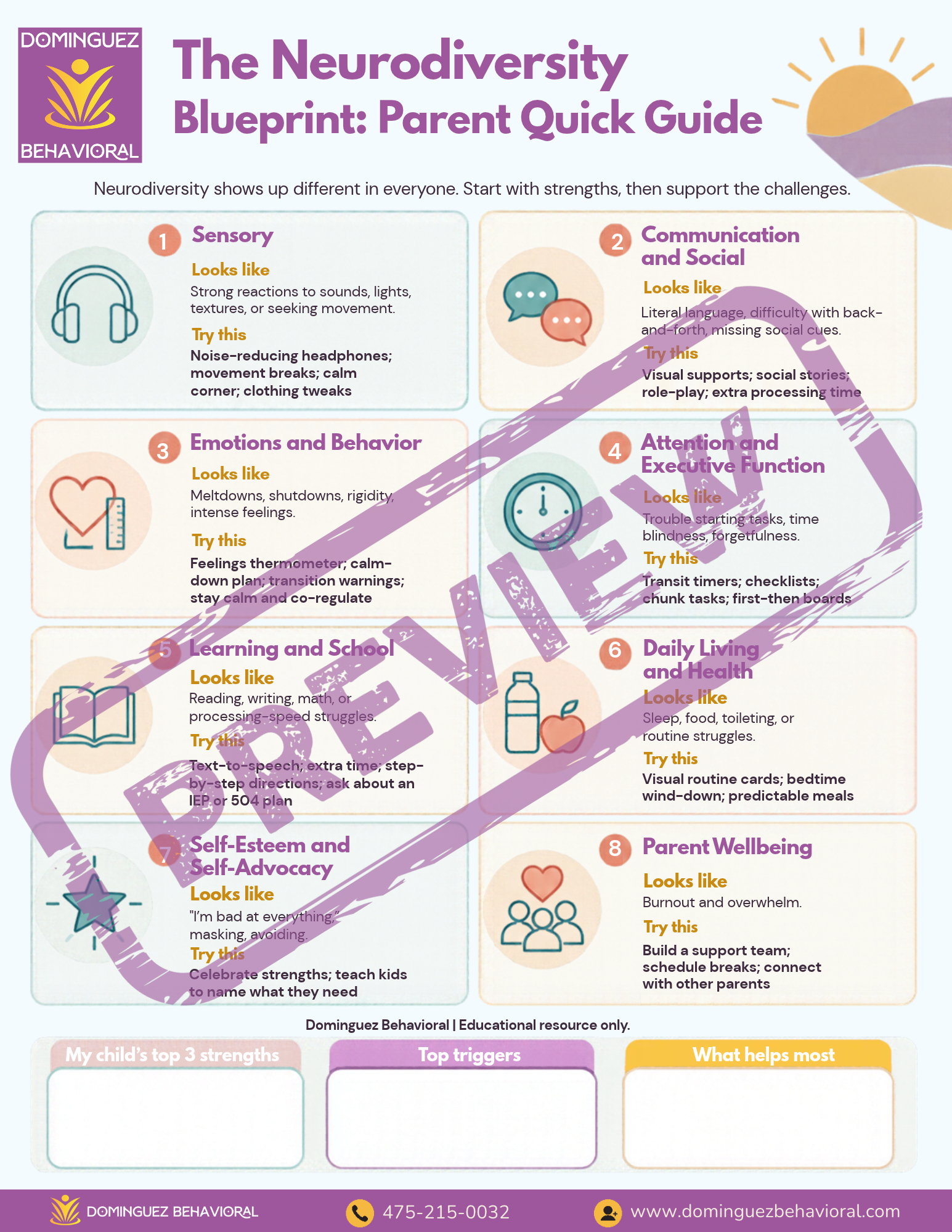
For six areas of classroom life, you’ll see what you might notice and what to try:
Sensory: covering ears, avoiding lights or textures, restlessness
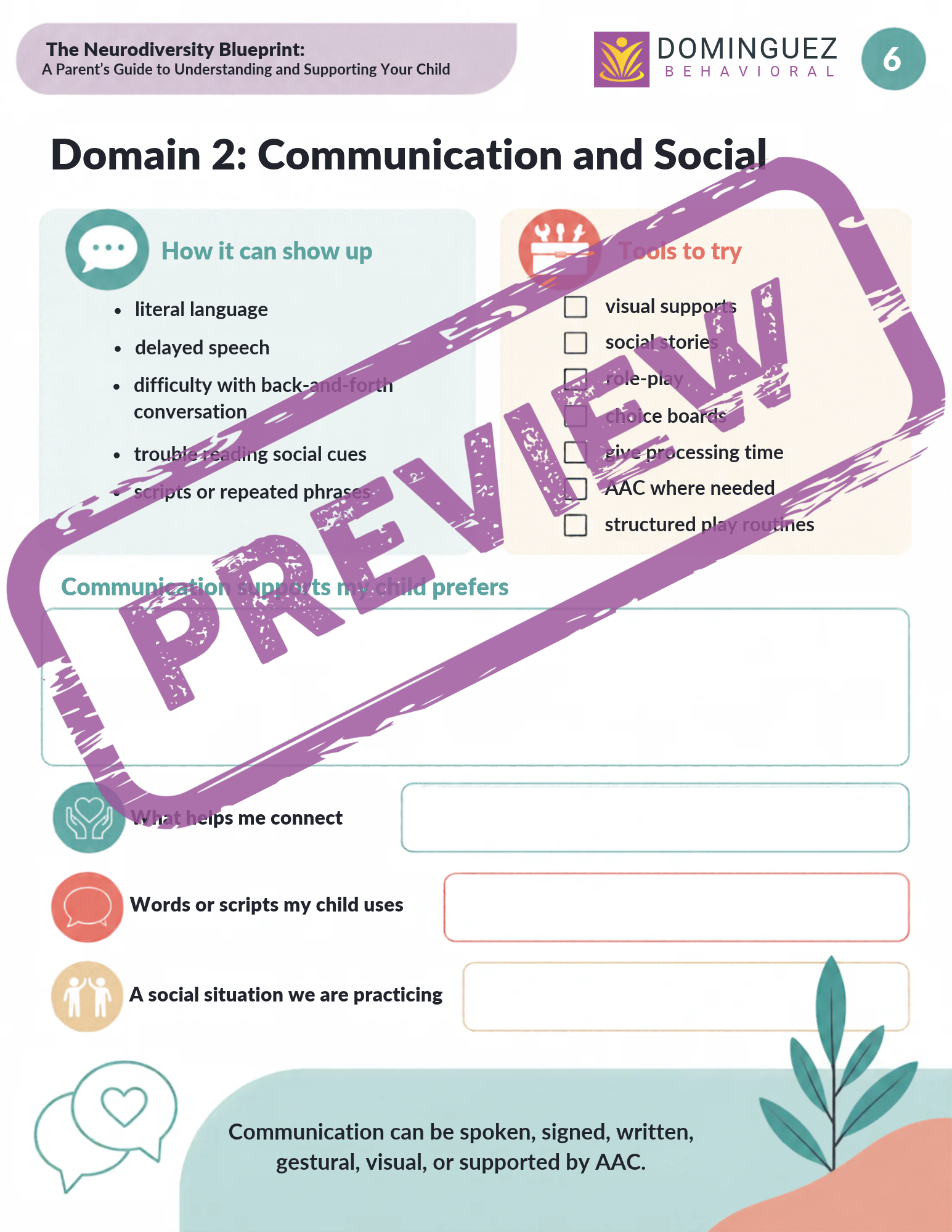
Communication and social: literal interpretation, trouble with group work
Emotions and behavior: meltdowns, shutdowns, refusal, rigidity
Attention and executive function: missing work, lost materials, trouble starting or switching tasks
Learning: reading, writing, or math struggles that don’t match ability
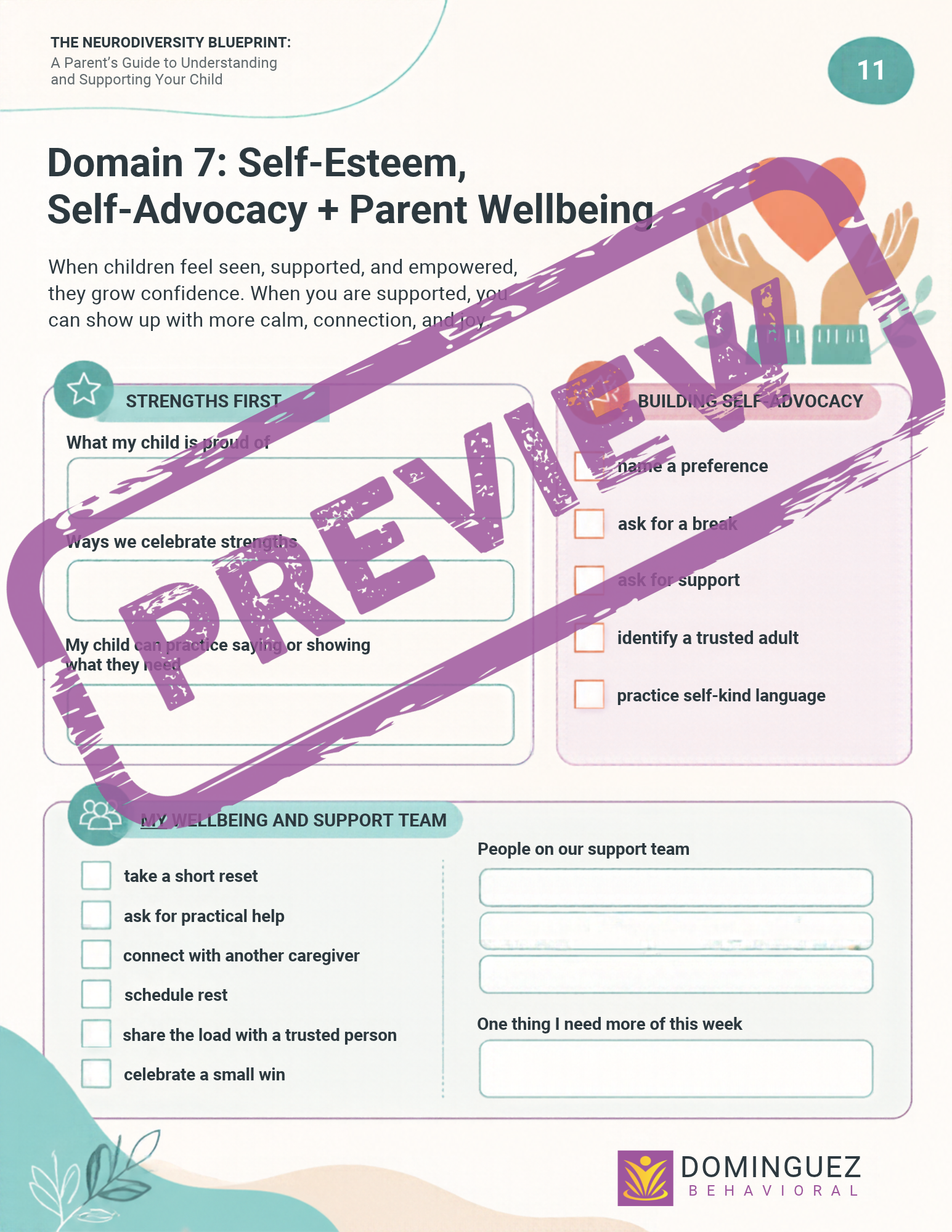
Self-esteem: masking, avoidance, “I’m dumb”
Plus three extras:
Quick wins: start tomorrow with small changes like greeting students at the door, posting a visual schedule, and giving 2-minute transition warnings.
Partnering with families: how to share wins first, ask what works at home, and refer concerns to your school team.
What to avoid: like punishing behavior that is a symptom, or calling students out in front of peers.
Who it’s for
Classroom teachers, special education teachers, school counselors, paraprofessionals, administrators, and anyone who works with students. It’s useful whether or not students in your class have a formal diagnosis.
Format: Printable PDF, 1 page, US Letter. Instant digital download.
Need more than a handout? Dominguez Behavioral offers staff trainings and student workshops for schools. Contact us to learn more.
Educational resource only. Not a diagnostic tool or a substitute for professional evaluation.


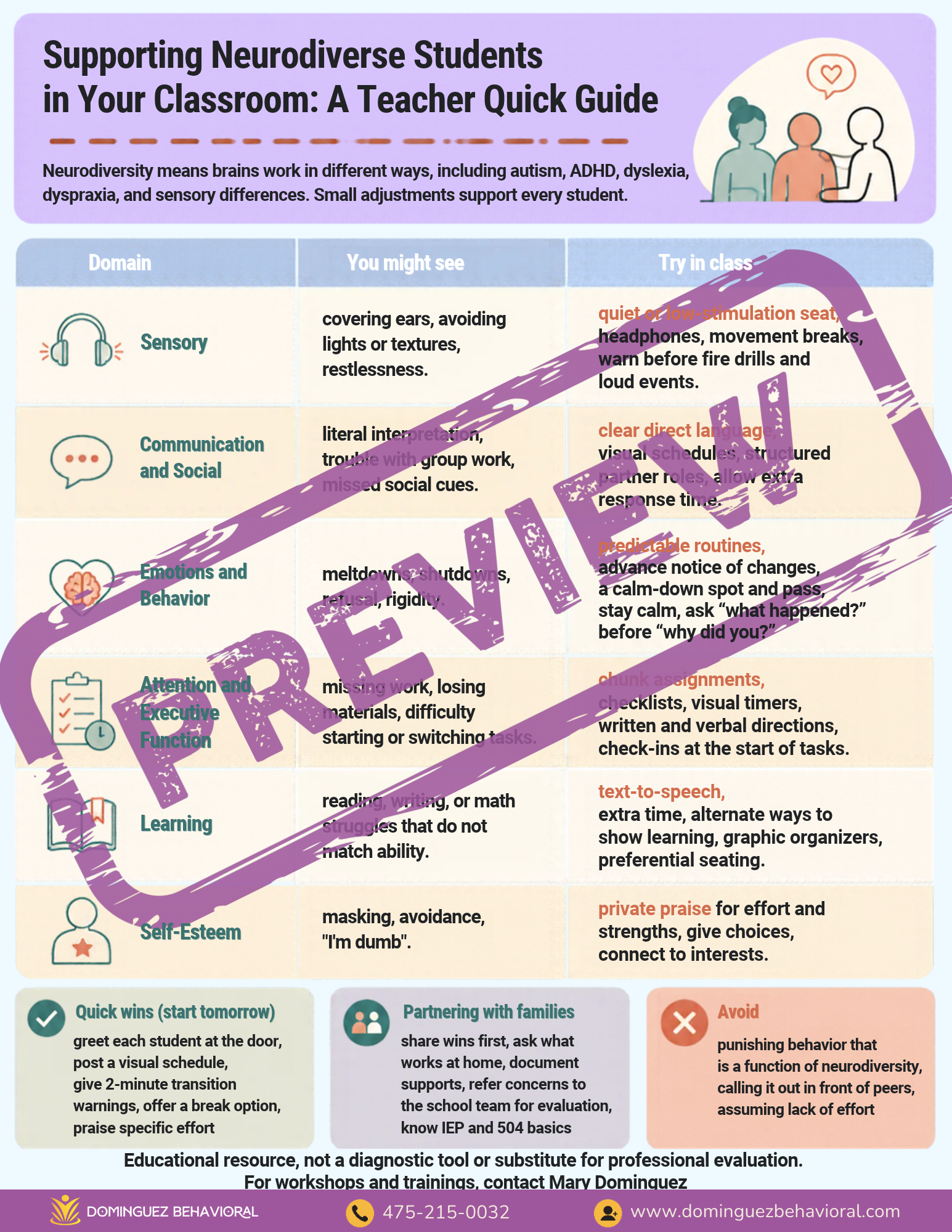 Image 1 of 1